
Depression is one of the most common mental health conditions in the world, yet many people still struggle to recognize its signs or seek professional support. While everyone feels sad, stressed, or emotionally low at times, depression is different. It can affect how a person thinks, feels, behaves, works, studies, sleeps, and connects with others.
For many individuals, depression feels like constantly carrying emotional weight that does not easily go away. Even simple daily tasks may start to feel exhausting. The good news is that depression is treatable, and recovery is possible with the right support and treatment.
At Mind Care Nepal, we believe that understanding mental health is the first step toward healing.
What Is Depression?
Major Depressive Disorder is a mental health condition characterized by persistent sadness, loss of interest, low motivation, emotional numbness, and changes in thinking, sleep, appetite, and energy levels.
Depression is not simply “feeling sad” for a day or two. It often lasts for weeks, months, or even longer if left untreated. It can affect children, teenagers, adults, students, working professionals, and elderly individuals.
People experiencing depression may find it difficult to:
- Enjoy activities they once loved
- Focus on studies or work
- Maintain relationships
- Feel hopeful about the future
- Take care of themselves
Depression can range from mild to severe, and symptoms may vary from person to person.
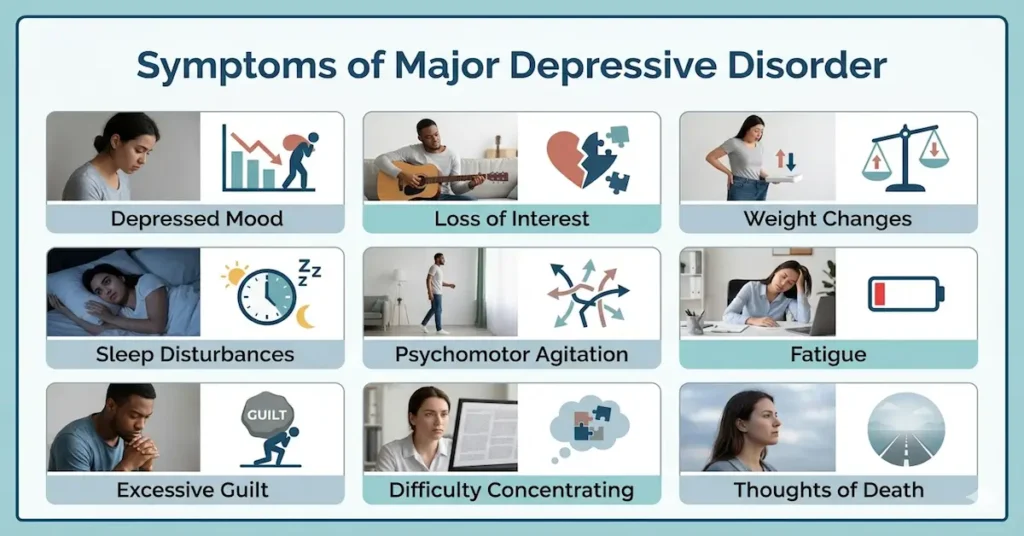
Common Symptoms of Depression
Depression affects emotional, cognitive, physical, and behavioral functioning.
Emotional Symptoms
- Persistent sadness
- Feeling empty or emotionally numb
- Hopelessness
- Irritability
- Frequent crying
- Feeling guilty or worthless
Cognitive Symptoms
- Overthinking
- Negative thinking patterns
- Difficulty concentrating
- Self-criticism
- Trouble making decisions
Physical Symptoms
- Fatigue or low energy
- Sleep problems
- Changes in appetite
- Headaches or body pain
- Reduced motivation
Behavioral Symptoms
- Social withdrawal
- Loss of interest in hobbies
- Reduced productivity
- Avoiding responsibilities
- Spending excessive time alone
If these symptoms continue for more than two weeks and interfere with daily life, professional mental health support may be beneficial.
Difference Between Sadness and Depression
Sadness is a normal human emotion that usually occurs after disappointment, stress, or loss. It often improves with time, rest, support, or positive experiences.
Depression, however, is deeper and more persistent. A person may continue to feel emotionally exhausted even when positive things happen around them. Motivation, concentration, sleep, and energy levels are often significantly affected.
Causes of Depression
Depression usually develops from a combination of biological, psychological, and social factors.
Biological Factors
- Family history of depression
- Brain chemistry changes
- Hormonal imbalance
- Chronic medical conditions
Psychological Factors
- Childhood trauma
- Low self-esteem
- Chronic stress
- Negative thinking patterns
- Emotional neglect
Social and Environmental Factors
- Relationship conflicts
- Academic pressure
- Workplace stress
- Financial difficulties
- Loneliness and isolation
Depressive disorder does not mean a person is weak. Mental health conditions are influenced by many interconnected factors.
Types of Depression
There are different forms of depression, including:
Major Depression
Severe depressive symptoms affecting daily functioning.
Persistent Depressive Disorder
Long-term low mood lasting for years.
Postpartum Depression
Depression experienced after childbirth.
Seasonal Depression
Mood changes linked to seasonal patterns and reduced sunlight exposure.
Depression with Anxiety
Many individuals experience both depression and anxiety symptoms together.
Treatment Options for Depression
Depression is treatable, and many individuals improve significantly with proper support.
Psychological Therapy
Therapy helps individuals understand emotions, identify unhealthy patterns, and develop healthier coping strategies.
Common evidence-based approaches include:
- Cognitive Behavioral Therapy
- Mindfulness
- Behavioral activation
- Supportive counseling
- Stress management techniques
Lifestyle Changes
Healthy routines can support recovery:
- Regular sleep schedule
- Physical activity
- Balanced nutrition
- Social connection
- Reducing excessive stress
Medication
Some individuals may benefit from medication prescribed by a psychiatrist, especially in moderate to severe depression.
Treatment varies depending on symptom severity, life circumstances, and individual needs.
When Should You Seek Professional Help?
It may be important to seek help if:
- Symptoms last longer than two weeks
- Daily functioning becomes difficult
- Emotional distress feels overwhelming
- Relationships or work are being affected
- Motivation and energy continue declining
Early intervention can improve recovery and prevent symptoms from worsening.
At Mind Care Nepal in Shankhamul, Kathmandu, we provide counseling and psychological support for children, adolescents, and adults experiencing depression, anxiety, stress, and emotional difficulties.
Self-Help Strategies for Managing Major Depressive disorder
Professional treatment is important, but small daily habits can also support emotional well-being.
Build Small Daily Routines
Start with manageable goals instead of forcing major changes.
Stay Physically Active
Even short walks and light exercise may improve mood and energy.
Maintain Social Connection
Talking to supportive friends or family members may reduce isolation.
Practice Journaling
Writing thoughts and emotions can improve emotional awareness.
Reduce Excessive Isolation
Depressive disorder often increases withdrawal, which may worsen symptoms over time.
Practice Self-Compassion
Recovery takes time. Avoid harsh self-judgment during difficult periods.
Common Myths About Depression
“Depression is just laziness.”
Depressive disorder is a real mental health condition that affects emotional and physical functioning.
“People should just think positively.”
Positive thinking alone is often not enough to treat clinical depression.
“Only weak people become depressed.”
Depressive disorder can affect anyone regardless of age, profession, education, or success.
“Therapy is only for severe cases.”
Therapy can help individuals at mild, moderate, or severe stages of emotional distress.
Frequently Asked Questions (FAQ)
What are the early signs of depression?
Common early signs include low motivation, sadness, fatigue, irritability, sleep changes, and loss of interest in daily activities.
Can depression be treated?
Yes. Many people improve with therapy, support, healthy lifestyle changes, and sometimes medication.
How long does depression treatment take?
Recovery time varies depending on symptom severity, treatment consistency, and individual circumstances.
Can students develop depressive disorder?
Yes. Academic pressure, social stress, loneliness, and emotional difficulties can contribute to depression in students.
Is depression different from stress?
Yes. Stress is usually linked to external pressure, while depression involves persistent emotional and behavioral symptoms that continue over time.
Final Thoughts
Depression can make life feel emotionally heavy and exhausting, but support and recovery are possible. Seeking help is not a sign of weakness. Understanding symptoms early and receiving appropriate support can make a significant difference in emotional well-being and quality of life.
If you or someone you know is struggling with depression, professional counseling and psychological support may help.
Contact Information
Shankhamul, Kathmandu, Nepal
Professional counseling and mental health support for children and adults. Click here to book a session with us.